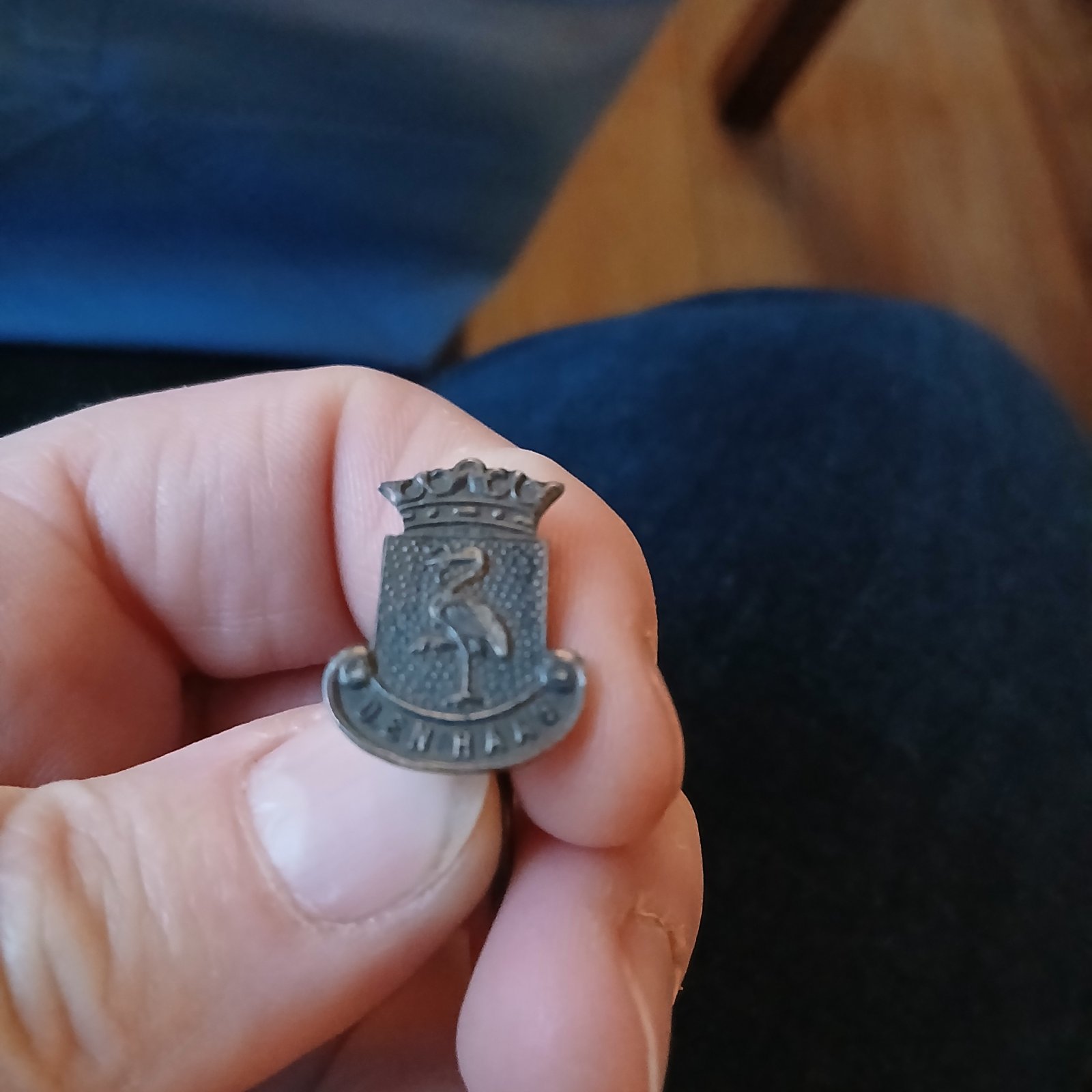
Vintage Pin Badge with Stork and Crown - Den Haag
QUICK FACTS
Categories
Era
Mid-20th Century (1930s-1970s)
Origin
🇳🇱 Netherlands
Rarity
Average (4/10)
Discovered
Jan 24, 2026
1 months ago
DESCRIPTION
This appears to be a vintage pin badge, likely an insignia or souvenir, featuring a heraldic design. The central motif is a stork-like bird, possibly a heron, surmounted by what looks like a crown or coronet. Below the bird, the word 'DEN HAAG' is visible. The badge is affixed with a 'cufflink-style' spike and plate on the reverse, indicating it was likely designed to be pushed through fabric and secured. The material has a dark, aged patina, suggesting it is made of a base metal, possibly bronze or a nickel alloy.
CULTURAL ECHOES
Where This Object Echoes
The use of animals (like the stork) and crowns within a shield motif is a common feature of European civic and noble heraldry, signifying origin or authority.
Small, inexpensive items like pins and badges have a long history as mementos of travel, events, or affiliation, often featuring local landmarks or symbols.
Ritual & Ceremonial Use
- •Wearing pins to display affiliation or pride (e.g., civic, organizational, military).
- •Collecting small mementos or souvenirs from places visited.
Meaning Through Time
Civic pride, commemoration, or affiliation with an organization.
Nostalgia, historical interest, or as a collectible item.
HISTORICAL STORY
DID YOU KNOW?
The Hague's coat of arms famously features a stork holding an eel, a symbol that has been used for centuries and is believed to bring good luck.
Pin badges, especially those depicting city or organizational emblems, were widely collected throughout the 20th century, often exchanged as souvenirs or worn to show affiliation.
MATERIAL & CONDITION
Surface
The surface is a dark, aged metallic, exhibiting a uniform patina consistent with a base metal that has oxidized over time. There are no obvious signs of plating loss, and the details of the stork and crown are still relatively clear despite the overall darkening.
Weight & Feel
Based on its size and apparent metal composition, the badge would likely feel lightweight but solid in hand, typical of a stamped or cast metal pin.
Condition
The pin appears to be in good vintage condition, exhibiting wear consistent with age and use. The dark patina is present throughout, and there are no visible chips, cracks, or significant dents. The reverse mechanism seems intact.
RARITY ANALYSIS
Typical antique shop fare. Requires some searching but regularly available. This is where most genuine antiques fall.
Typical Characteristics
- Standard antique shop items
- Regularly available
- Moderate collector interest
EXPERT ANALYSIS
General Collectibles Specialist
The visual evidence clearly identifies the object as a pin badge related to Den Haag, Netherlands, with a consistent vintage appearance. The lack of specific maker's marks or precise dating prevents a higher confidence level.
KEY EVIDENCE
- 1Central motif of a stork/heron with a crown.
- 2Inscription 'DEN HAAG' clearly visible.
- 3Dark, uniform patina on the metal surface.
- 4Cufflink-style fixing mechanism on the reverse.
- 5Overall design suggests civic or commemorative use.
UNCERTAINTIES
- •Specific manufacturer or designer not identified.
- •Exact date of production is an estimation without additional markings.
WHAT WOULD IMPROVE CERTAINTY
- →Examine under magnification for any tiny maker's marks or hallmarks on the reverse.
- →Research historical municipal pins for The Hague to potentially narrow down the exact design period.
- →Consider gentle cleaning to reveal any underlying details, though this could affect patina.
ESTIMATED VALUE
Updated: Feb 27, 2026
- Market comparables from auctions & retail
- Condition, completeness & craftsmanship
- Current collector demand & trends
- Low = quick sale, high = patient seller
For informational purposes only, not a formal appraisal.
SHARE THIS CURIOSITY
Have your own curiosities to discover?
Scan Your Curiosity
COMMENTS
No comments yet. Be the first to share your thoughts!
Sign in to leave a comment