First Generation Toyota Celica (TA22/RA21)
QUICK FACTS
Categories
Era
Early 1970s (likely 1974-1975)
Origin
🇯🇵 Japan
Brand
Toyota
Rarity
Uncommon (5/10)
Discovered
Jan 13, 2026
1 months ago
DESCRIPTION
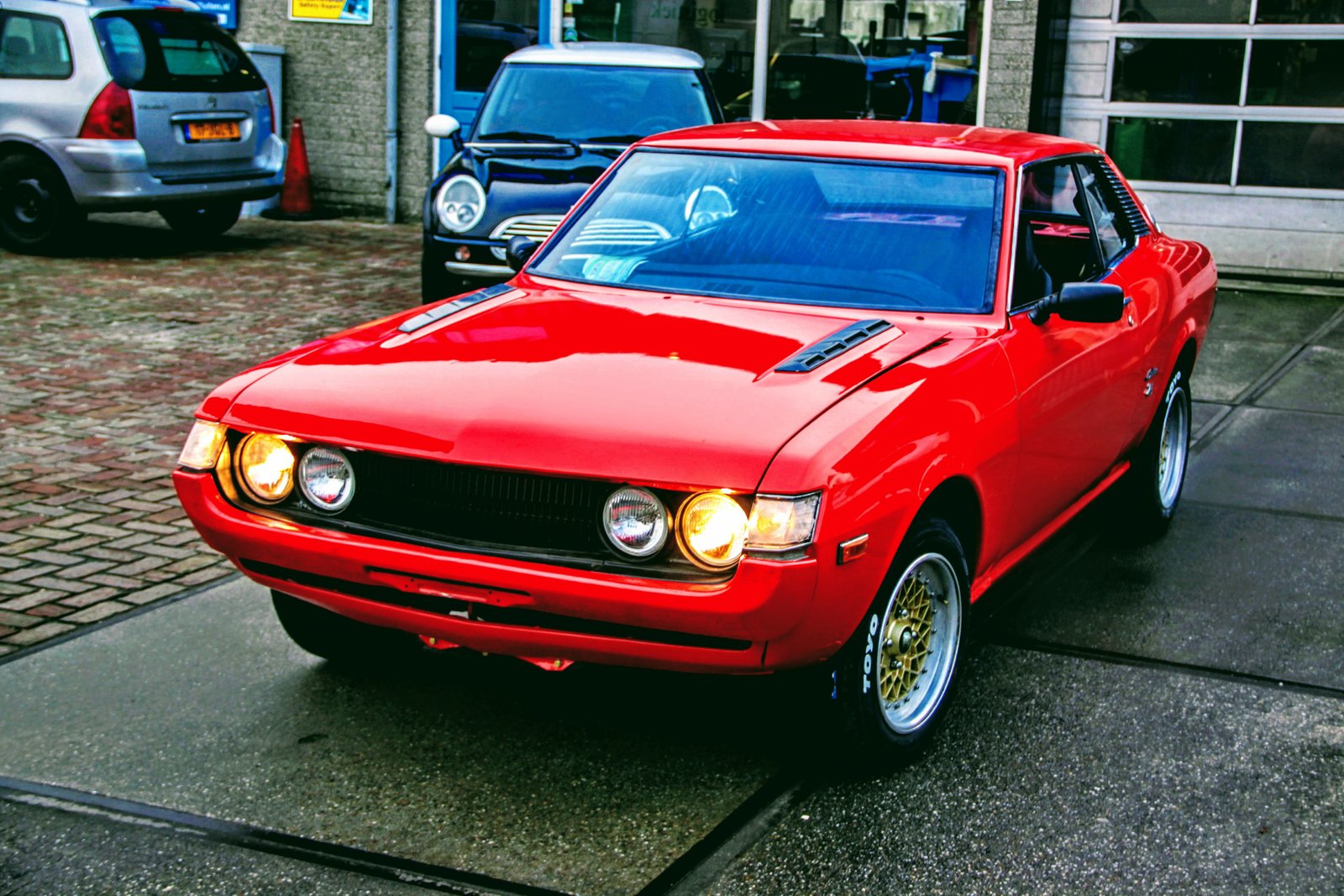
This appears to be a First Generation Toyota Celica, specifically the hardtop coupe (TA22 or RA21 chassis code depending on engine and market). Its bright red respray and aftermarket mesh wheels suggest a focus on a customized classic aesthetic rather than a strictly original 'survivor' presentation. The dual headlamp setup indicates it's likely a later model in the first generation run, possibly a 1974 or 1975.
CULTURAL ECHOES
Where This Object Echoes
The Celica's styling, particularly the long hood, short deck, and pillarless hardtop, was heavily influenced by iconic American pony cars like the Ford Mustang and Chevrolet Camaro.
Ritual & Ceremonial Use
- •Custom car shows and classic meet-ups, where owners display their restored or modified vintage vehicles.
- •Weekend cruising, enjoying the driving experience of a classic sports coupe.
Meaning Through Time
When new, the Celica represented an innovative, sporty, and reliable alternative to European and American coupes, offering a taste of 'Japan, Inc.'s' growing automotive prowess.
Today, first-generation Celicas are appreciated as accessible vintage Japanese classics, often drawing comparisons to early Mustangs due to their styling and robust drivetrain, and are sought after by collectors interested in the genesis of Japanese sports cars.
HISTORICAL STORY
DID YOU KNOW?
The first-generation Celica was one of the first Japanese cars designed with customization in mind, leading to a vibrant aftermarket scene early in its life.
Toyota offered the Celica with a 'safety bumper' option for the US market in 1974, which somewhat altered its distinctive grille and front-end aesthetics to comply with regulations.
MATERIAL & CONDITION
Surface
The bright red paint shows a high gloss, suggesting a recent respray. The reflections indicate a smooth, well-prepped surface, though minor orange peel or imperfections are hard to discern from these images. There's good reflectivity in the chrome trim and glass, and the black plastic grille appears clean.
Weight & Feel
These cars were relatively lightweight for their era, often under 2,400 lbs (1100 kg). The overall impression is of a compact, nimble coupe.
Condition
Visually, the exterior appears to be in very good, restored condition with a fresh paint job. The glass is clear, and trim appears intact. The aftermarket wheels and updated tires move it from original 'survivor' status towards a well-maintained or lightly restored and modified classic.
RARITY ANALYSIS
Genuine antiques with fewer examples on the market. Named makers, documented provenance, or early production examples.
Typical Characteristics
- Limited production
- Named makers
- Growing collector demand
EXPERT ANALYSIS
Automotive Historian
The visible distinct body lines, grille, and headlight configuration strongly identify this as a first-generation Toyota Celica hardtop coupe from the 1974-1975 model years. However, without VIN, engine bay, and interior photos, precise year and model variant identification remains an estimate.
KEY EVIDENCE
- 1Distinctive 'coke bottle' styling with long hood and short deck, characteristic of the first-gen Celica coupe.
- 2Iconic quad headlamp setup (two circular lights per side) with turn signal at the outer edge, indicating a later 1st generation model (1974-1975).
- 3Integrated grille design typical of the 1974-1975 models before the 'safety bumper' changes became more prominent.
- 4Aftermarket mesh wheels with gold centers, a popular modification for vintage Japanese sports cars to achieve a tuner or period-correct aesthetic.
UNCERTAINTIES
- •Images do not show the interior, engine bay, or VIN plate, which are crucial for full assessment.
- •The presence of a respray means original paint condition and potential bodywork history are unknown.
- •No visible badging to confirm specific model variant (e.g., ST, GT) or engine type.
WHAT WOULD IMPROVE CERTAINTY
- →Obtain clear photos of the VIN plate and chassis number for precise identification and verification.
- →Request detailed images of the engine bay to assess engine originality and condition.
- →Inspect the interior for originality, wear, and any modifications.
- →Review service records or any available documentation to confirm mileage and maintenance history.
- →Perform paint depth gauge readings to determine respray quality and identify any hidden bodywork.
ESTIMATED VALUE
Updated: Feb 26, 2026
- Market comparables from auctions & retail
- Condition, completeness & craftsmanship
- Current collector demand & trends
- Low = quick sale, high = patient seller
For informational purposes only, not a formal appraisal.
SHARE THIS CURIOSITY
Have your own curiosities to discover?
Scan Your Curiosity
COMMENTS
No comments yet. Be the first to share your thoughts!
Sign in to leave a comment