Mid-Century Modern Glazed Earthenware Jugs and Vase
QUICK FACTS
Categories
Era
Mid-20th Century (1950s-1970s)
Origin
🌍 International
Brand
Faiencerie de Thulin
Artist/Maker
Eskaph (ETB)
Rarity
Average (4/10)
Discovered
Jan 28, 2026
about 1 month ago
DESCRIPTION
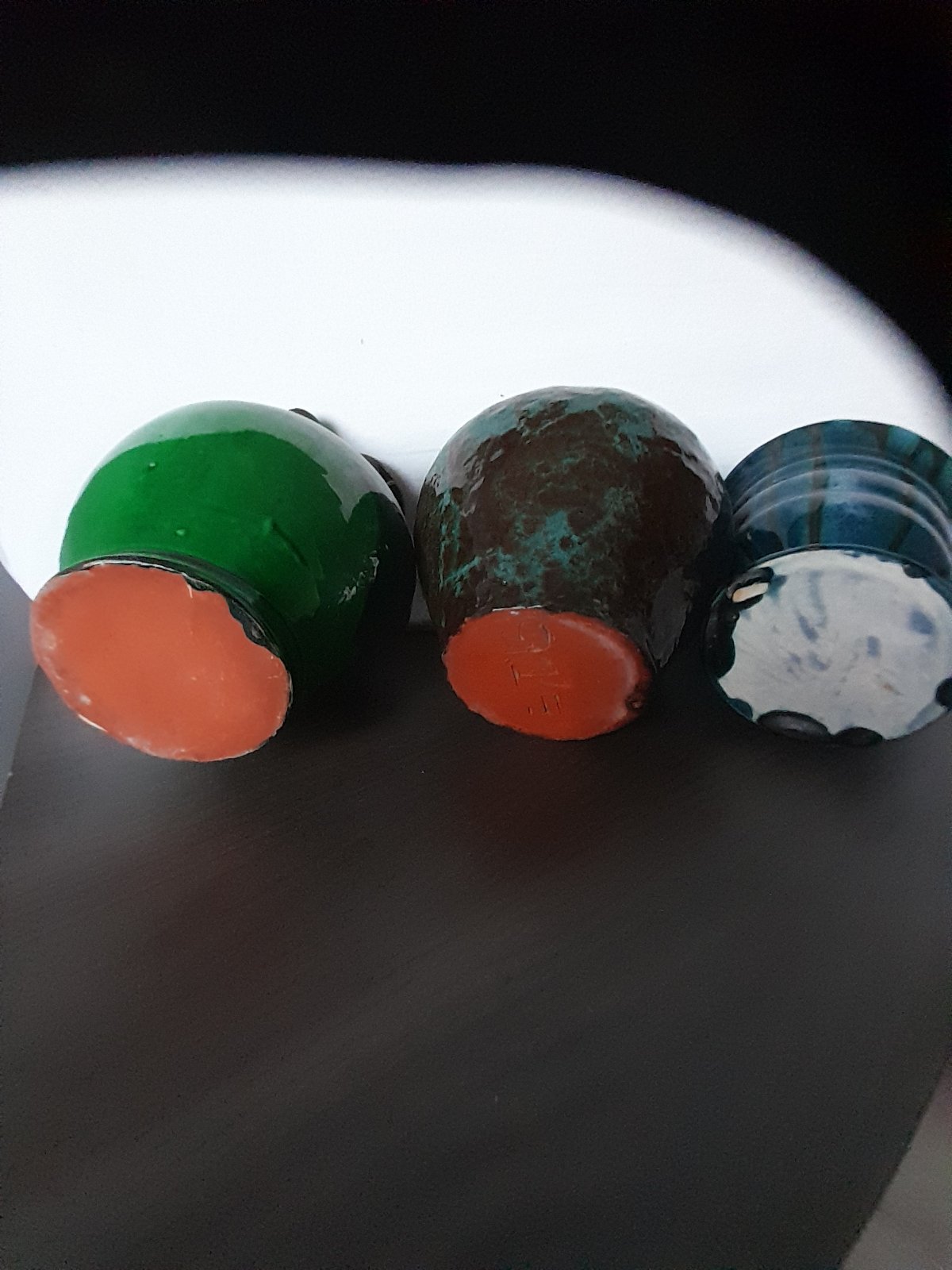
This ensemble features three pieces of glazed earthenware, likely from the mid-20th century, characterized by vibrant, reactive glazes. The forms are stout and organic, reflecting common trends in studio pottery and decorative household ceramics from that era. One piece, a small jug or pitcher, displays an apple-green lower body transitioning to a rich brown, while a globular companion piece features a striking mottled blue-green and brown 'fat lava' type glaze. The third item is a flaring vase with a vibrant blue drip glaze. The exposed unglazed footrings reveal the reddish-brown earthenware body beneath.
CULTURAL ECHOES
Where This Object Echoes
Post-war West Germany produced a vast array of expressive, organically shaped ceramics with bold, experimental glazes, often leveraging the 'fat lava' effect.
The global studio pottery movement encouraged individual artists to explore unique forms and glazing techniques, moving away from industrial uniformity.
Ritual & Ceremonial Use
- •Domestic decoration and display, aligning with mid-century interior design aesthetics.
- •Gift-giving, as art pottery often served as thoughtful and decorative presents.
Meaning Through Time
Ceramics largely adhered to traditional forms reflecting historical styles.
A shift towards abstract, organic, and textural forms, with glazes becoming an artistic element in themselves.
HISTORICAL STORY
DID YOU KNOW?
Reactive glazes, like those seen on these pieces, achieve their varied effects through chemical reactions during high-temperature firing, making each piece uniquely patterned.
The 'fat lava' glaze, known for its textured, blistered appearance, was particularly popular in West German pottery during the 1960s and 70s.
MATERIAL & CONDITION
Surface
The visible glazes are predominantly glossy, with the green piece showing a smooth, even application. The mottled blue-green and brown piece exhibits a highly textured, almost blistered surface characteristic of reactive or 'fat lava' glazes. The blue vase features deliberate drip lines. The unglazed footrings are a rustic, matte terracotta.
Weight & Feel
These pieces appear to be of moderate weight, typical for earthenware, suggesting a solid but not exceptionally dense construction. The smaller forms would feel substantial in hand.
Condition
Visually, the glazes appear intact with good sheen. The exposed footrings show typical wear and kiln grit, which is expected. There are no obvious chips or cracks visible in the provided images, though a more thorough inspection would be needed to assess any minor crazing or manufacturing imperfections.
RARITY ANALYSIS
Typical antique shop fare. Requires some searching but regularly available. This is where most genuine antiques fall.
Typical Characteristics
- Standard antique shop items
- Regularly available
- Moderate collector interest
EXPERT ANALYSIS
Decorative Arts Specialist
Confidence is good regarding the estimated era and general type of ceramic, backed by consistent stylistic and glazing cues. However, individual attribution to a specific maker remains unconfirmed without further mark research, which limits maximum confidence.
KEY EVIDENCE
- 1Forms are bulbous and organic, characteristic of mid-century design.
- 2Glaze applications (apple-green, mottled 'fat lava', drip blue) are consistent with techniques popular in the 1950s-1970s.
- 3Unglazed earthenware footrings align with common production methods for decorative ceramics of this period.
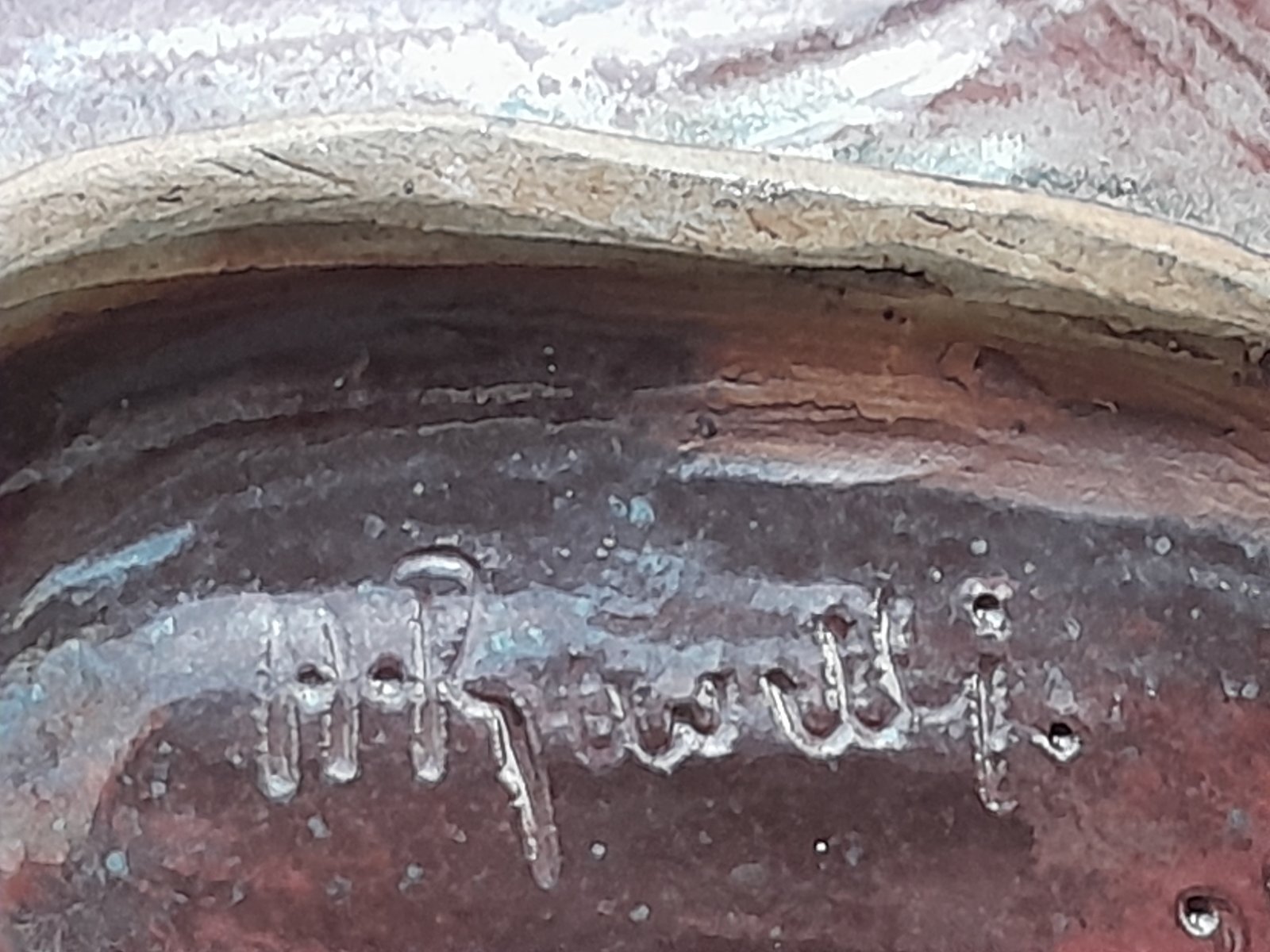
- 4Hand-incised 'ETB' mark on one piece suggests a maker or artist, typical of studio or smaller factory production.
UNCERTAINTIES
- •The specific maker for the 'ETB' mark is not immediately identifiable without further research.
- •Lack of clear date codes or factory stamps inhibits precise dating or attribution.
WHAT WOULD IMPROVE CERTAINTY
- →Perform a more detailed inspection of the 'ETB' mark and search ceramic marks databases for potential matching makers.
- →Check for any subtle impressed numbers or symbols that might indicate shape numbers or production dates.
- →Examine the interior of the pieces for any additional marks or details.
- →Use a UV light to check for any hidden repairs or restorations, especially around the rims and bases.
ESTIMATED VALUE
Updated: Feb 27, 2026
- Market comparables from auctions & retail
- Condition, completeness & craftsmanship
- Current collector demand & trends
- Low = quick sale, high = patient seller
For informational purposes only, not a formal appraisal.

ABOUT DECORATIVE OBJECTS
Ceramics, silver, porcelain, glassware, and decorative arts.
Browse all Decorative ObjectsSHARE THIS CURIOSITY
Have your own curiosities to discover?
Scan Your Curiosity
COMMENTS
No comments yet. Be the first to share your thoughts!
Sign in to leave a comment