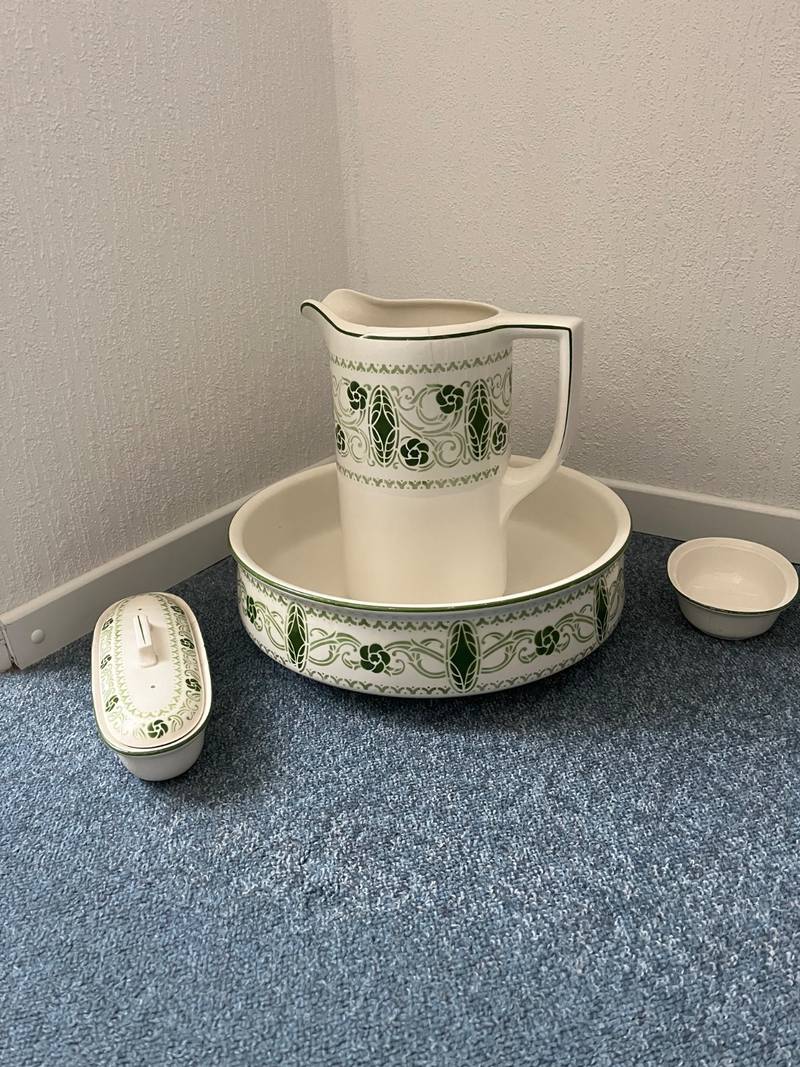
Victorian Era Enameled Ironstone Wash Basin and Pitcher Set
Estimated value
$75 - $250Rarity
Average(4/10)Category
Decorative ObjectsBrand
Sociëte Céramique MaastrichtEra
1880-1920Origin
InternationalAuthenticity
VICTORIAN ERA ENAMELED IRONSTONE WASH BASIN AND PITCHER SET: IDENTIFICATION
This appears to be a late 19th to early 20th-century washbasin and pitcher set, likely made from enameled ironstone, a popular material for such utilitarian yet decorative household items of the period. The decorative green foliage pattern suggests a stylistic influence from the Arts and Crafts movement or a more generalized late Victorian aesthetic that favored natural motifs. The ensemble includes a large pitcher, a comprehensive wash basin, a lidded soap dish, and what appears to be a smaller individual soap or catchall dish. The robust construction in enamelware was favored for its durability and ease of cleaning in an era before widespread indoor plumbing.
CROSS-CULTURAL PARALLELS
Where This Object Echoes
The emphasis on nature-inspired motifs, organic forms, and functional yet aesthetic design seen in the green foliage pattern aligns with core Arts and Crafts principles.
Wash sets were central to personal hygiene rituals in middle and upper-class Victorian homes, embodying the era's focus on cleanliness and decorative interiors.
Ritual & Ceremonial Use
- •Daily personal ablutions in bedrooms before the advent of indoor plumbing.
- •The decorative aspect elevated a mundane task, reflecting social standards of cleanliness and domestic embellishment in Victorian households.
Meaning Through Time
An essential and functional household item for personal hygiene.
A decorative antique, often repurposed as a planter, centerpiece, or period-accurate decorator item.
SCARCITY
Typical antique shop fare. Requires some searching but regularly available. This is where most genuine antiques fall.
Typical Characteristics
- Standard antique shop items
- Regularly available
- Moderate collector interest
Confidence Factors
- Common household item with prevalent examples from the era.
- Utilitarian nature and wear patterns are consistent with period use.
- No high-value brand or artist attribution that would typically attract forgery.
DECORATIVE ARTS EXPERT'S TAKE
Furniture Historian & Restoration Specialist
My confidence is high based on the consistent form, material appearance, and decorative style typical of late Victorian to Edwardian era washbasin and pitcher sets. The included accessory pieces further reinforce this identification.
KEY EVIDENCE
- 1Overall form factors of the pitcher and basin are typical of late 19th/early 20th-century wash sets.
- 2Enameled ironstone or ceramic construction was standard for these domestic items, offering durability for daily use.
- 3The green foliage pattern is consistent with decorative trends of the period such as Arts and Crafts or generalized Victorian aesthetics.
- 4Inclusion of a lidded soap dish and smaller basin confirms the complete nature of a washstand ensemble.
UNCERTAINTIES
- •Absence of maker's marks or backstamps prevents precise attribution to a specific manufacturer or designer.
- •The exact material (ironstone, earthenware, or porcelain) could only be definitively confirmed with a direct physical inspection.
WHAT WOULD IMPROVE CERTAINTY
- →Inspect the underside of all pieces for any maker's marks, impressed stamps, or glaze identifying information.
- →Examine the interior of the basin and pitcher for any signs of discoloration or heavy wear that might impact value.
- →Provide close-up photographs of any chips, cracks, or repairs, particularly on the pitcher's rim and handle.
- →Evaluate the stability of the glaze for any widespread crazing that might compromise the integrity of the finish.
CONDITION & GRADE
Condition
The set shows signs of age-appropriate wear, including minor chips or hairline cracks on the pitcher's rim, which is common. The enamel appears largely intact with the bold green decoration showing good retention. No major structural damage or significant repairs are immediately apparent, which is positive for an item that saw daily use.
DECORATIVE ARTS VALUATION
Updated: Feb 27, 2026
- Market comparables from auctions & retail
- Condition, completeness & craftsmanship
- Current collector demand & trends
- Low = quick sale, high = patient seller
For informational purposes only, not a formal appraisal.
ABOUT DECORATIVE OBJECTS
Silver, glassware, metalwork, enamelwork, and decorative arts.
Decorative Objects value and rarity guideSHARE THIS CURIOSITY
Have your own curiosities to discover?
Scan Your Curiosity
COMMENTS