German Hanau Silver Pierced Bonbon Dish - late 19th Century
Estimated value
$250 - $450Rarity
Average(4/10)Category
Decorative ObjectsEra
circa 1880-1910Origin
GermanyAuthenticity
GERMAN HANAU SILVER PIERCED BONBON DISH - LATE 19TH CENTURY: IDENTIFICATION
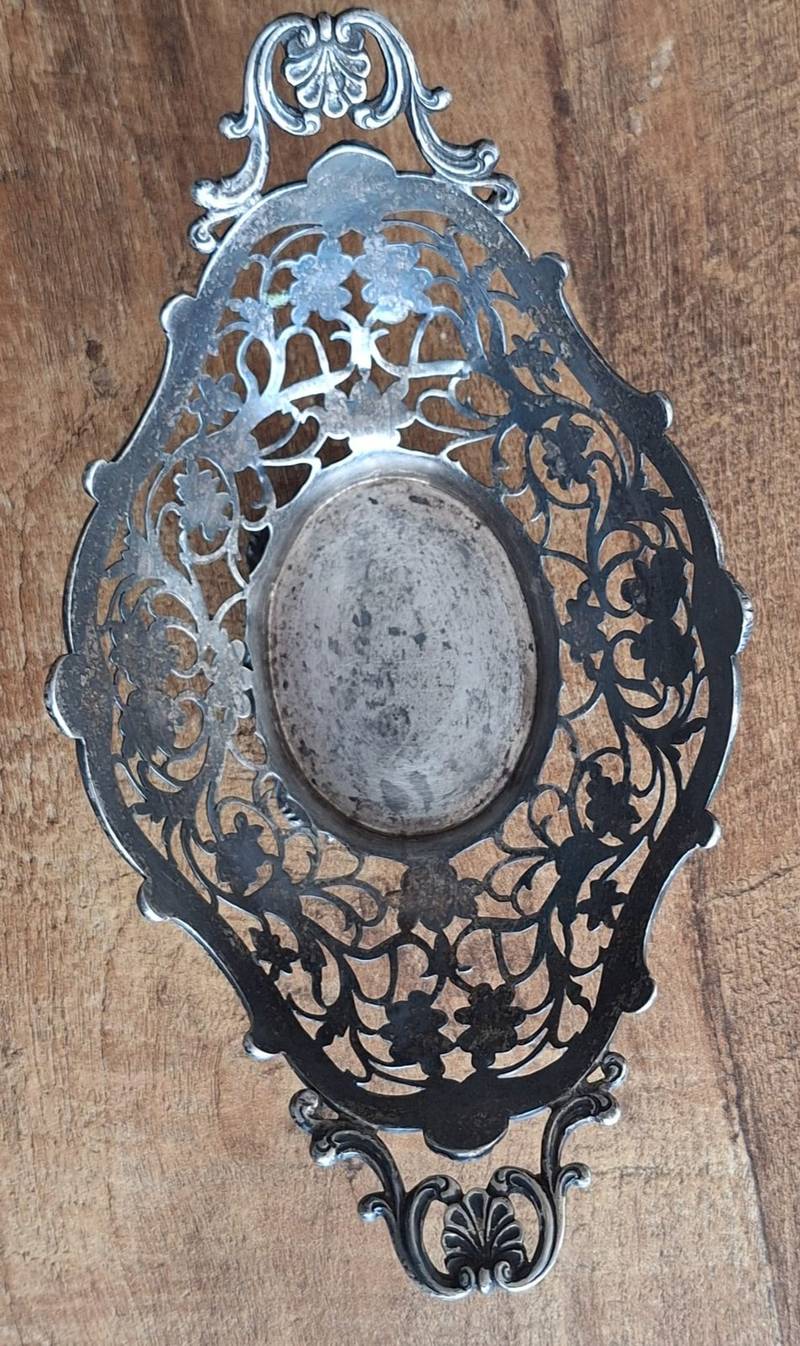
An oval-shaped silver bonbon dish featuring a wide border of hand-chased and pierced scrollwork with floral motifs. The vessel includes two cast foliate handles with shell-form terminations. The flat oval base provides stability and bears two distinct hallmarks on the exterior underside. The pierced openwork design is characteristic of German neo-Baroque revivals common in the late 19th century.
CROSS-CULTURAL PARALLELS
Where This Object Echoes
Pierced silver 'mandjes' (baskets) were a staple of 18th-century Dutch prestige dining, influencing later German revivals.
Ritual & Ceremonial Use
- •The 'Bonbonnière' tradition involving the serving of sugared almonds or small confections during afternoon tea or formal dessert courses.
Meaning Through Time
A display of 'ancien régime' sophistication and historical appreciation through revivalist metalwork.
PRODUCTION PERIOD
COLLECTOR NOTES
Hanau silver makers frequently used silver with a fineness of 800 parts per 1,000, which was more durable for the intricate piercing seen here than softer 925 sterling.
The 1888 German Imperial Stamp Act eventually standardized silver marking, but many Hanau workshops continued their traditional pseudo-mark styles for export until the early 20th century.
SCARCITY
Typical antique shop fare. Requires some searching but regularly available. This is where most genuine antiques fall.
Typical Characteristics
- Standard antique shop items
- Regularly available
- Moderate collector interest
Confidence Factors
- Hallmarks on the base are consistent with 19th-century German manufacturing practices
- Construction techniques such as cast handles applied to a pierced body align with period standards
- Wear patterns and tarnish distribution are consistent with a century of age
DECORATIVE ARTS EXPERT'S TAKE
Decorative Arts Specialist
The identification is based on clearly visible construction methods and hallmark placement typical of the Hanau region, though specific maker identification requires clearer mark detail.
KEY EVIDENCE
- 1Distinct pseudo-hallmarks on the base, one featuring a crowned shield and another with a capital 'H' or maker's device.
- 2Hand-chased floral detail visible on the interior rim prior to the piercing.
- 3Asymmetrical scrollwork characteristic of the Neo-Rococo Hanau style.
- 4Cast handles show file marks at the join points, indicating traditional hand-assembly.
UNCERTAINTIES
- •Oxidation may hide small stress fractures in the thinnest parts of the pierced vine work.
WHAT WOULD IMPROVE CERTAINTY
- →Provide a high-magnification macro photo of the two marks on the base for specific maker attribution.
- →Gently clean a small area with a non-abrasive silver cloth to check for 'EPNS' (electroplate) wear-through, though hallmarks suggest solid silver.
- →Perform a weight check in grams to assess silver value vs. antique premium.
CONDITION & GRADE
Grading breakdown
Evaluation of antique silver focuses on hallmark clarity and the integrity of pierced work; this example maintains structurally sound ornamentation despite surface oxidation.
Condition
Significant sulfur-based tarnish is visible across the entire surface, particularly on the interior well. There are minor scratches on the flat base consistent with table contact, but the intricate piercing appears intact with no visible breaks in the scrollwork.
DECORATIVE ARTS VALUATION
Updated: May 11, 2026
Similar German 800 silver baskets sold at Woolley & Wallis and Heritage Auctions between 2022 and 2024 for $300-$500 depending on weight.
Who buys this
Collectors of Continental silver and interior designers seeking authentic late-Victorian dining accessories.
What increases value
- •Integrity of the pierced scrollwork
- •Clarity of the maker's marks
- •Grams of silver content
- •Complexity of the floral chasing
What lowers value
- •Breaks or solder repairs in the delicate piercing
- •Aggressive over-polishing that removes the 'crispness' of the hand-chased details
What makes top-tier examples
- •Identification of specific prestigious Hanau firms like Schleissner
- •800 or 830 silver purity marks
Grade & condition
Condition is determined by the absence of 'bleeding' (copper showing through if plated, though likely solid here) and the crispness of the pierced edges.
Rarity & demand
For informational purposes only, not a formal appraisal.
ABOUT DECORATIVE OBJECTS
Silver, glassware, metalwork, enamelwork, and decorative arts.
Decorative Objects value and rarity guideSHARE THIS CURIOSITY
Have your own curiosities to discover?
Scan Your Curiosity
COMMENTS