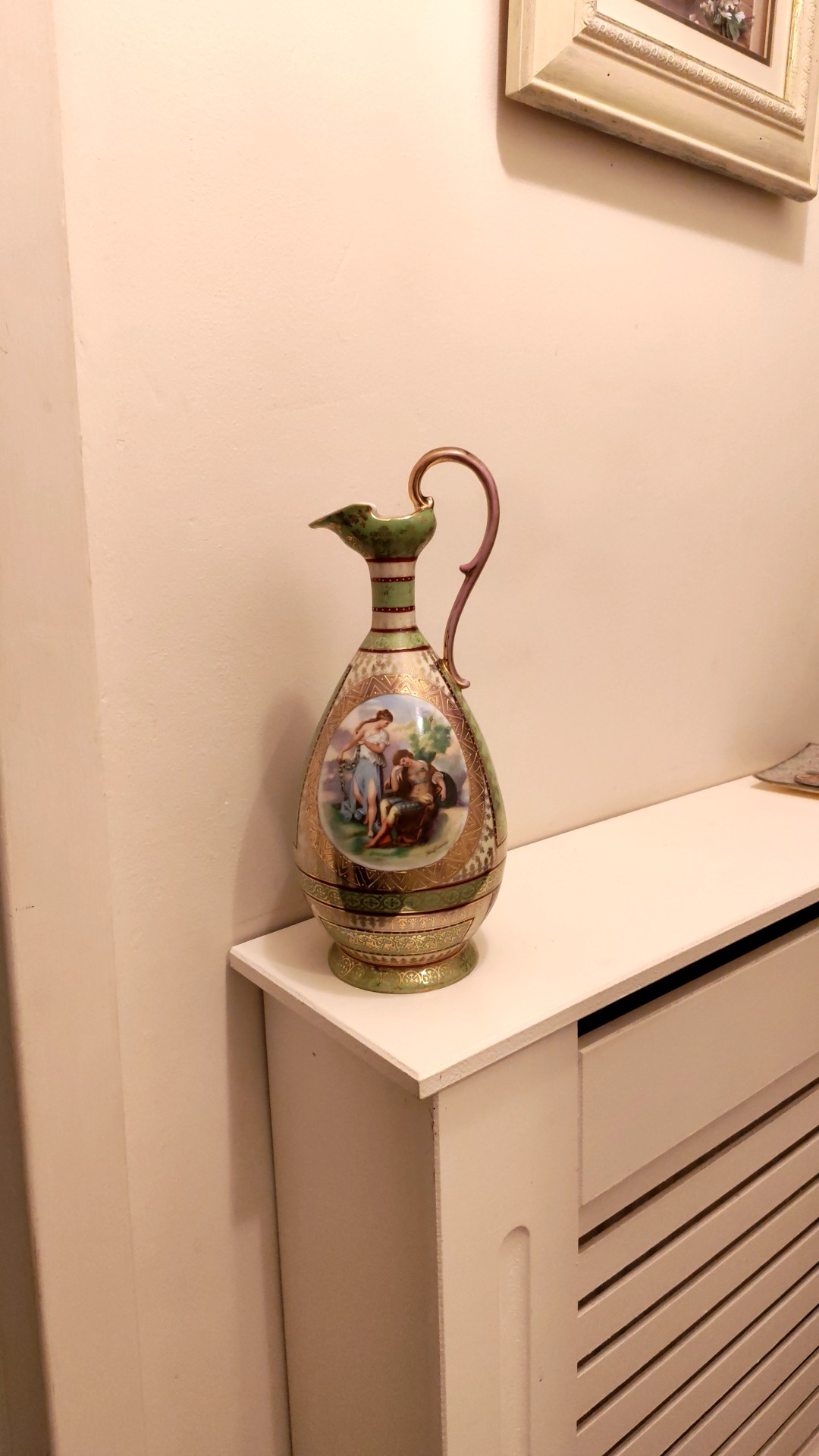
Porcelain Ewer with Rococo Style Decoration
QUICK FACTS
Categories
Era
Late 19th to Early 20th Century
Rarity
Average (4/10)
Discovered
Mar 2, 2026
8 days ago
DESCRIPTION
This appears to be a porcelain ewer, characterized by its elegant, elongated form with a spout and a single handle. The decoration is quite elaborate, featuring rococo-style pastoral scenes within reserves, framed by intricate gilding and multicolored enamel detailing, predominantly in shades of green, gold, and teal. The body seems to be of a hard-paste porcelain, given the crispness of the painted details and the white base visible on the underside. The handle has a slightly iridescent or metallic finish.
CULTURAL ECHOES
Where This Object Echoes
Known for highly decorative, often gilded porcelain with painted figural scenes, especially during the 18th and 19th centuries.
Many German porcelain factories, particularly those around Dresden, emulated earlier rococo styles and produced richly decorated wares in the late 19th and early 20th centuries.
Ritual & Ceremonial Use
- •Domestic display: Objects like this ewer were primarily intended for decorative display in grand homes, serving as a focal point in a salon or cabinet.
- •Gift-giving: Fine porcelain objects were often exchanged as gifts, marking special occasions or symbolizing status.
Meaning Through Time
In the original Rococo period, such elaborate pieces were hallmarks of aristocratic opulence and refined taste, often functional but exquisitely decorated.
During the Rococo Revival, these pieces became accessible to a broader middle-class audience, symbolizing aspirational elegance and a connection to historical European grandeur, primarily as decorative rather than functional items.
HISTORICAL STORY
DID YOU KNOW?
Historically, ewers were used for carrying water for handwashing, often paired with a basin, but by the 19th century, purely decorative versions became popular as 'cabinet pieces' for display.
The 'rococo' style, seen in the decorative panels, originated in 18th-century France and is known for its light, playful, and often asymmetrical ornamentation, frequently featuring nature, mythology, and romantic love.
MATERIAL & CONDITION
Surface
The surface is glazed white porcelain richly decorated with overglaze enamels and gilding. The enamel decoration exhibits varied opacity and sheen, with some areas appearing textured and others smooth. The gilded accents appear to be hand-applied, showing some minor wear consistent with age, particularly on raised areas like the handle.
Weight & Feel
Based on its size and apparent material, it likely has a moderate to substantial weight for a porcelain vessel, feeling solid yet not overly heavy. The handle would provide a balanced grip.
Condition
The ewer appears to be in good overall condition with some minor wear, particularly to the gilded areas, which is common for objects of this age. There are no immediately visible cracks, chips, or significant repairs, though a closer inspection would be required to confirm this.
RARITY ANALYSIS
Typical antique shop fare. Requires some searching but regularly available. This is where most genuine antiques fall.
Typical Characteristics
- Standard antique shop items
- Regularly available
- Moderate collector interest
EXPERT ANALYSIS
Decorative Arts Specialist
Confidence is good regarding the style and estimated era based on the visual ornamentation and form. However, the lack of a clear maker's mark prevents a definitive attribution and precise dating, impacting higher confidence.
KEY EVIDENCE
- 1The overall form of the ewer is consistent with late 19th to early 20th-century decorative porcelain production.
- 2The decorative motifs, including the pastoral scenes and intricate gilding, strongly suggest a Rococo Revival style.
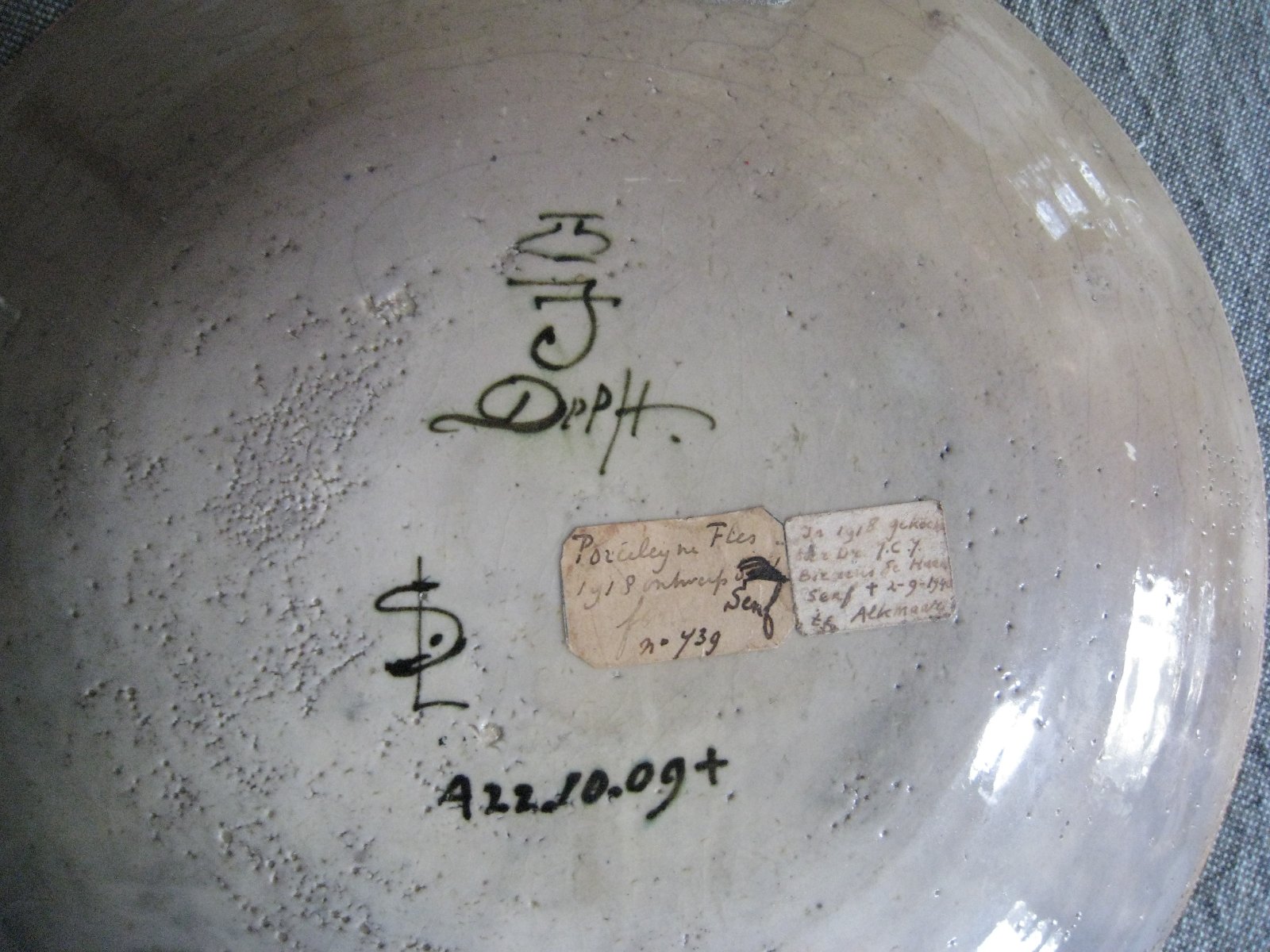
- 3The visible mark on the base, while indistinct, indicates a factory or potter's mark, crucial for further identification.
- 4The handling of the overglaze enamels and gilding suggests a skilled decorative technique.
UNCERTAINTIES
- •The specific manufacturer or origin cannot be definitively identified without a clear image of the mark on the base.
- •The quality of the imagery makes it challenging to differentiate between hand-painted and transfer-printed elements in some areas, which impacts valuation.
WHAT WOULD IMPROVE CERTAINTY
- →Provide a high-resolution, clear photo of the mark on the underside of the base, ideally under direct even lighting.
- →Examine the piece under UV light to detect any overpainting, repairs, or restorations that are not visible to the naked eye.
- →Take detailed close-up photos of the painted figural scenes and intricate gilded work to assess the painting quality and application technique more closely.
- →Measure the height and widest diameter of the ewer for better size context.
ESTIMATED VALUE
Updated: Mar 2, 2026
- Market comparables from auctions & retail
- Condition, completeness & craftsmanship
- Current collector demand & trends
- Low = quick sale, high = patient seller
For informational purposes only, not a formal appraisal.
CONTEXT ANALYSIS
How your provided context compares with Curiosa.com scanner findings.
What Aligned
- The user's note of 'minor wear' aligns with visual evidence of some rubbing on the gilding, which is typical for an older decorative object.
- The provenance from a grandmother suggests an item with some age, consistent with the late 19th to early 20th century stylistic indications.

ABOUT DECORATIVE OBJECTS
Ceramics, silver, porcelain, glassware, and decorative arts.
Browse all Decorative ObjectsSHARE THIS CURIOSITY
Have your own curiosities to discover?
Scan Your Curiosity
COMMENTS
No comments yet. Be the first to share your thoughts!
Sign in to leave a comment