Curiosa
Sign InTry a scan

Decorative Arched Desk Clock with Floral Transfer Decoration
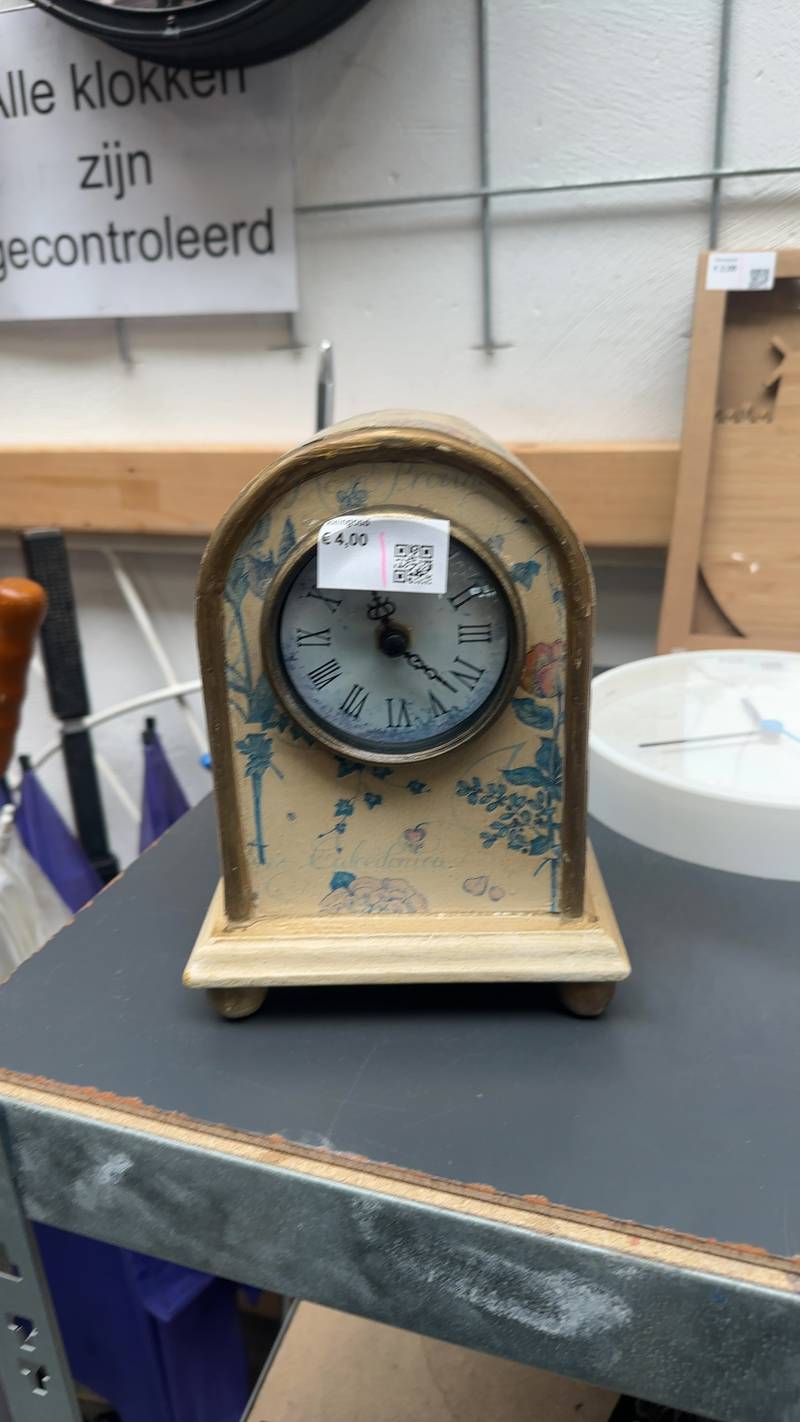
Small arched-top desk clock with floral decorations and Roman numeral face, displayed on a shelf in a general store setting.

Estimated value

$10 - $30

Rarity

Common(2/10)

Era

Late 20th Century to Early 21st Century

Origin

🌍 International

Authenticity

Very High(85%)
33

DECORATIVE ARCHED DESK CLOCK WITH FLORAL TRANSFER DECORATION: ORIGINS & SIGNIFICANCE

This appears to be a small decorative desk or mantel clock, possibly constructed from wood or a composite material, featuring an arched top and a rectangular base with small spherical feet. The face is inset and displays Roman numerals. The entire casing is decorated with what appears to be a transfer print of floral motifs in muted tones, suggesting a late 20th or early 21st-century production aimed at a decorative rather than horological market.

ORNAMENT ACROSS TRADITIONS

Where This Object Echoes

European Decor19th-21st Century

The use of floral motifs and arched forms in decorative accessories is a recurring theme in European interior design, often evoking pastoral or classical aesthetics.

Ritual & Ceremonial Use

  • Often placed on mantelpieces, bookshelves, or desks, such clocks serve as decorative elements, contributing to the ambiance and visual style of a living space.
  • Gift-giving, particularly for occasions like housewarmings or retirements, where decorative clocks are presented as tokens of remembrance or good wishes.

Meaning Through Time

18th-19th Century

Clocks were often precision instruments, status symbols, and central household pieces, featuring intricate mechanisms and craftsmanship.

20th-21st Century

With the advent of mass production and digital timekeeping, mechanical clocks largely shifted from primary utility to decorative accent, valued more for their aesthetic contribution than their horological accuracy.

CRAFT THROUGH THE AGES

Decorative clocks of this type are common in both the late 20th and early 21st centuries, often mass-produced to serve as ornamental accents in homes rather than as precision time-keeping devices. Their style frequently draws inspiration from earlier periods, such as Neoclassical or Victorian ...
Decorative clocks of this type are common in both the late 20th and early 21st centuries, often mass-produced to serve as ornamental accents in homes rather than as precision time-keeping devices. Their style frequently draws inspiration from earlier periods, such as Neoclassical or Victorian designs with floral embellishments, but simplified for modern manufacturing processes. The use of transfer printing is a cost-effective method of applying complex decorative patterns, diverging from the hand-painted or intricate carved work of historical artisanal clocks.

ARTISAN FOOTNOTES

1

Table clocks like this became popular as household decorations in the late 19th and 20th centuries, moving beyond strict utility to embrace varied aesthetic styles.

2

The use of Roman numeral VI as IIII on clock faces, as seen here, is a common stylistic quirk dating back centuries, often done for aesthetic balance on the dial.

HOW SCARCE IS IT?

Common20-40%
CommonLegendary

Older mass-produced items still widely available. Easy to find on eBay, antique malls, and estate sales in large quantities.

Typical Characteristics

  • Mass produced historically
  • High survival rate
  • Readily available everywhere

Confidence Factors

  • Item is a common mass-produced decorative clock.
  • No high-value maker mark or complex features to counterfeit.
  • Construction and style are consistent with typical modern decorative items.
How does authenticity detection work?

DECORATIVE ARTS EXPERT'S TAKE

Decorative Arts Specialist

Ceramics & Silver Expert

Confidence is high based on strong visual cues pointing to a mass-produced modern decorative clock. The visible price tag and general aesthetic align with contemporary decorative items.

KEY EVIDENCE

  • 1The decoration appears to be a transfer print rather than hand-painted, indicative of mass production.
  • 2The overall design and material (likely wood/composite) suggest a decorative item rather than a fine horological piece.
  • 3The presence of a barcode price tag visible in the image is typical of modern retail or thrift store environments.
  • 4Roman numerals are printed on the dial, a common feature for decorative clocks.

WHAT WOULD IMPROVE CERTAINTY

  • Inspect the back of the clock for any maker's marks, battery compartment, or movement details.
  • Examine the clock face for any fine print or branding.
  • Perform a physical check of the mechanism (if accessible) to determine if it is a quartz or mechanical movement.
  • A UV light examination could reveal any subtle repairs to the decorative finish.

CONDITION & GRADE

Condition

The clock appears to be in fair to good condition for a used decorative item. There is some minor wear and possibly chipping or abrasion on the gold-toned trim around the clock face. The paper label with the price suggests it is offered for sale in an operational state, though its timekeeping accuracy cannot be assessed visually.

Surface

The surface appears to be a painted or lacquered finish over what is likely wood or MDF, with a matte or slightly satin sheen. The floral decorations are likely a transfer print, evidenced by their uniform appearance and lack of brushstrokes. A gold-toned trim frames the clock face, which shows some signs of wear and slight discoloration, possibly from age or handling.

Weight & feel

Given its size and apparent construction of wood or composite, this clock would likely feel lightweight to moderately substantial, certainly not heavy, consistent with a decorative item.

DECORATIVE ARTS VALUATION

$10 - $30

Updated: Feb 27, 2026

  • Market comparables from auctions & retail
  • Condition, completeness & craftsmanship
  • Current collector demand & trends
  • Low = quick sale, high = patient seller

For informational purposes only, not a formal appraisal.

FROM THE CABINET OF

AD

adeboer

Fellow Collector25 items

COMMENTS

No comments yet. Be the first to share your thoughts!

Sign in to leave a comment

ABOUT DECORATIVE OBJECTS

Silver, glassware, metalwork, enamelwork, and decorative arts.

Decorative Objects value and rarity guide

SHARE THIS CURIOSITY

Have your own curiosities to discover?

Scan Your Curiosity