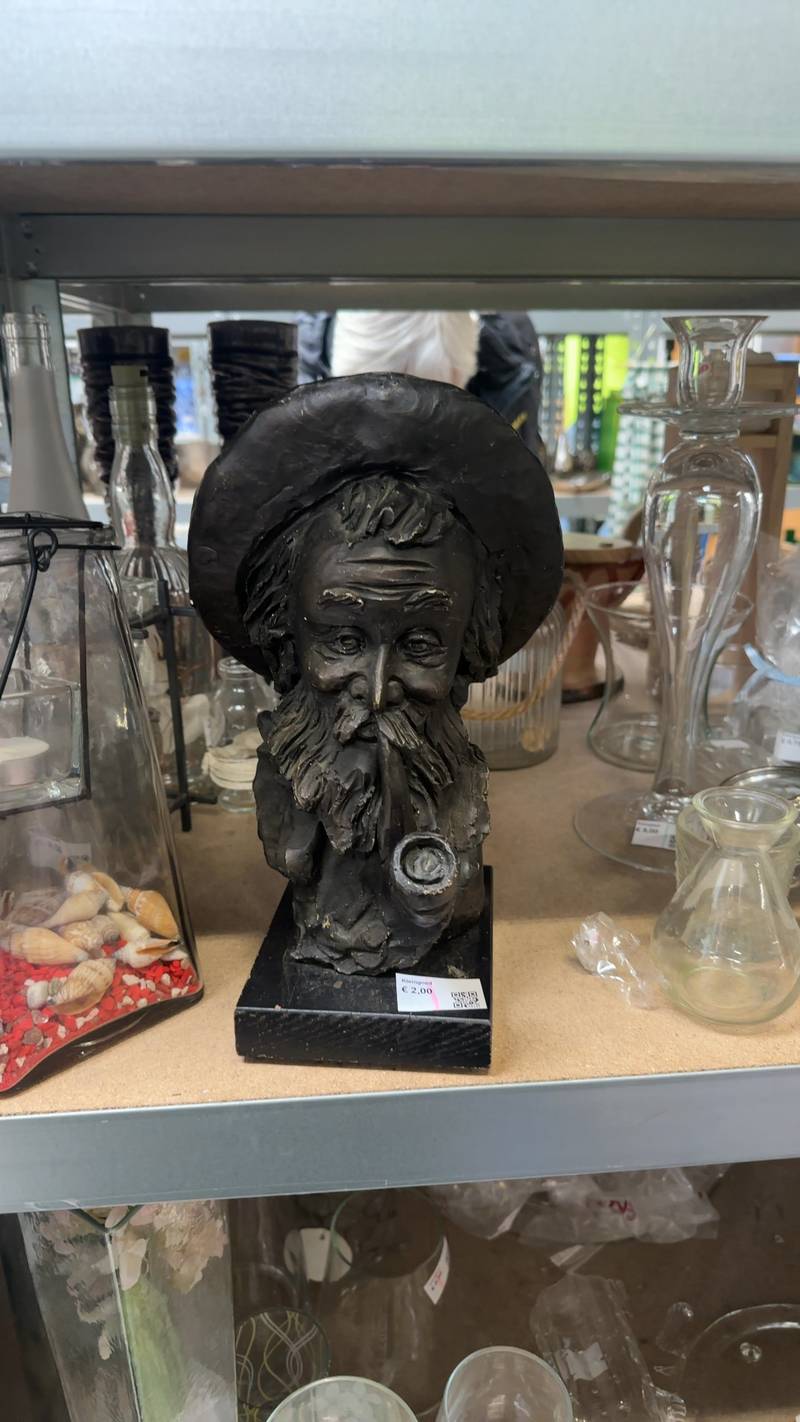
Bust of a Bearded Man with Pipe
Estimated value
$10 - $30Rarity
Ordinary(3/10)Category
Decorative ObjectsEra
Mid-20th Century to Late 20th Century (1950s-1980s)Origin
InternationalAuthenticity
BUST OF A BEARDED MAN WITH PIPE: IDENTIFICATION
This appears to be a decorative bust, likely cast in a composite material, depicting a bearded man wearing a broad-brimmed hat and smoking a pipe. The detailing on the beard, hat, and facial features suggests an attempt at textural realism, but the overall execution indicates a mass-produced item rather than a fine art sculpture. The dark, uniform finish gives the impression of bronze or patinated metal, though it is quite probable it's resin or a similar material.
SCARCITY
Standard antiques commonly found at estate sales and flea markets. Plentiful supply meets modest demand.
Typical Characteristics
- Moderate production runs
- Common at estate sales
- Entry-level collectibles
Confidence Factors
- This is a common decorative item type with no high-value attributes that would incentivize forgery.
- The material and style are consistent with typical mass-produced decorative objects of its era.
DECORATIVE ARTS EXPERT'S TAKE
Decorative Arts Specialist
My confidence is good as the visual characteristics strongly suggest a mass-produced decorative bust from the mid-to-late 20th century, likely made of resin or a similar composite. The primary uncertainty is the exact material without direct handling.
KEY EVIDENCE
- 1The uniform dark finish suggests a composite material rather than true bronze or painted ceramic.
- 2The level of detail in the casting indicates a mold-made, likely mass-produced item.
- 3The style of the hat and beard aligns with mid-20th century decorative arts trends.
- 4No visible maker's marks or signatures, which is common for such decorative items.
WHAT WOULD IMPROVE CERTAINTY
- →Examine the base for any mold marks, date codes, or manufacturer stamps.
- →Perform a 'tap test' to gauge hollowness and material density (a plastic or resin tap will sound different from ceramic or metal).
- →Inspect the underside for any signs of mold lines or seams, indicative of casting processes.
CONDITION & GRADE
Condition
The bust appears to be in relatively good condition for its age and type, showing some general surface wear and perhaps a bit of dust. There are no obvious chips, cracks, or repairs visible from the provided images.
DECORATIVE ARTS VALUATION
Updated: Feb 27, 2026
- Market comparables from auctions & retail
- Condition, completeness & craftsmanship
- Current collector demand & trends
- Low = quick sale, high = patient seller
For informational purposes only, not a formal appraisal.
ABOUT DECORATIVE OBJECTS
Silver, glassware, metalwork, enamelwork, and decorative arts.
Decorative Objects value and rarity guideSHARE THIS CURIOSITY
Have your own curiosities to discover?
Scan Your Curiosity
COMMENTS