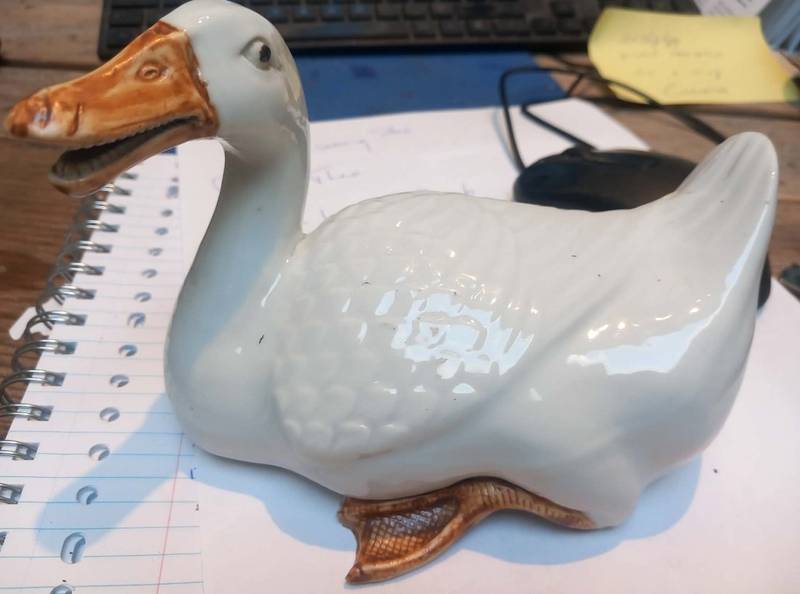
Mid-20th Century Glazed Ceramic Goose Figurine
Estimated value
$15 - $45Rarity
Ordinary(3/10)Category
Ceramics & PotteryEra
Circa 1950-1970Origin
InternationalAuthenticity
MID-20TH CENTURY GLAZED CERAMIC GOOSE FIGURINE: IDENTIFICATION
A slip-cast ceramic figurine depicting a seated goose with a slightly open beak. The body is finished in a high-gloss white lead-based or feldspathic glaze, while the beak and webbed feet feature an iron-oxide brown wash. The molding shows stylized feathering on the wings and a cross-hatched texture on the feet. The flat, unglazed base reveals a coarse, greyish-white earthenware body with significant surface soiling and no visible factory marks.
CROSS-CULTURAL PARALLELS
Where This Object Echoes
Echoes the 19th-century English tradition of affordable animal figures created for the working-class 'mantelpiece' market.
Ritual & Ceremonial Use
- •Mid-century 'Country Chic' domestic interior styling and collection
Meaning Through Time
A symbol of rustic domesticity and affordable home ornamentation.
PRODUCTION & FIRING
SCARCITY
Standard antiques commonly found at estate sales and flea markets. Plentiful supply meets modest demand.
Typical Characteristics
- Moderate production runs
- Common at estate sales
- Entry-level collectibles
Confidence Factors
- Construction techniques align perfectly with mid-century mass production
- Material degradation on the base is consistent with 50+ years of age
- No indicators of modern high-fidelity reproduction
CERAMICIST'S ASSESSMENT
Ceramics Historian & Kiln Specialist
Identification is stable due to the clear manufacturing indicators (slip-casting, glaze type, and base wear), though the lack of a mark prevents a 0.90+ confidence level.
KEY EVIDENCE
- 1Slip-cast hollow construction visible through molding lines
- 2Iron-oxide wash application on extremities is a standard industrial ceramic technique
- 3Unglazed flat base typical of mid-century firing on batts or kiln shelves
- 4Earthenware paste shows greyish tint common in non-refined utility clays
UNCERTAINTIES
- •Lack of maker's mark limits specific factory attribution
- •Substantial breakage on the foot significantly impacts secondary market value
WHAT WOULD IMPROVE CERTAINTY
- →Examine the interior through the base hole (if present) to check for slip-thickness and internal kiln dust
- →Clean the unglazed base with a soft brush to check for faint impressed numbers or 'Japan' stamps
- →Perform a ring-test by tapping the neck to check for hairline cracks not visible to the eye
CONDITION & GRADE
Grading breakdown
Structural integrity is compromised by the large chip on the foot, though the glaze remains largely free of crazing or significant scratching.
Condition
Significant missing fragment on the left webbed foot and a visible chip on the rear tail feathers. The base shows heavy shelf wear and residual dirt accumulation consistent with long-term domestic display.
CERAMICS MARKET VALUE
Updated: May 10, 2026
Similar unmarked mid-century goose figurines sell on eBay for $15-$25, while marked Beswick examples can reach $60+.
Who buys this
Casual vintage decor enthusiasts and collectors of farm animal figurines.
What increases value
- •Subject matter appeal for country-style kitchen decor
- •Glossy glaze integrity on the main body
What lowers value
- •Large break on the foot is a 'major fault' for serious collectors
- •Unmarked status makes it a generic 'anonymous' piece
What makes top-tier examples
- •Presence of a Goebel or Beswick factory mark
- •Absence of structural chips and kiln-firing cracks
- •Original foil export labels
Grade & condition
Chips, cracks, glaze crazing, and presence of factory marks.
Rarity & demand
For informational purposes only, not a formal appraisal.
ABOUT CERAMICS & POTTERY
Pottery, porcelain, stoneware, earthenware, and kiln-fired objects.
Ceramics & Pottery value and rarity guideSHARE THIS CURIOSITY
Have your own curiosities to discover?
Scan Your Curiosity
COMMENTS